Salary transparency in Europe has emerged as a cornerstone of equitable workplace practices, gaining momentum globally and particularly within Europe. The European Union’s Pay Transparency Directive, adopted on June 7, 2023, represents a significant advancement in promoting equitable pay practices across member states. This directive mandates that companies with over 100 employees disclose information on gender pay disparities and take corrective measures if gaps exceed 5% without objective justification.
EU member states are required to transpose the directive into national law by June 7, 2026. However, organizations are advised to begin preparations promptly to ensure a seamless transition and compliance within the stipulated timeframe
The Current Landscape of Salary Transparency in Europe
The EU Pay Transparency Directive mandates that organizations with over 100 employees disclose gender pay gaps and take corrective actions if disparities exceed 5% without justification. Furthermore, job applicants must be informed about pay ranges before interviews, and employees have the right to access data about average pay levels broken down by gender for comparable roles. These measures aim to dismantle systemic inequalities in pay structures while fostering a culture of openness.
However, Europe’s journey toward transparency is shaped by the broader implications of wage disclosure, as explored in contemporary labor economics. “Resistant transparency”—the reluctance of organizations to disclose salary information—remains a significant barrier. This resistance often stems from concerns about losing control over wage negotiations and the potential conflicts arising from perceived inequities (Südkamp & Dempsey, 2021).
The Role of Transparency in Addressing the Gender Pay Gap
Research underscores that salary transparency can substantially mitigate gender pay disparities. Legislative examples, such as Denmark’s mandate for gender-disaggregated wage statistics, have demonstrated measurable reductions in pay gaps (Bennedsen et al., 2022). Similarly, studies suggest that empowering women with negotiation training and fostering collaborative negotiation environments amplify the benefits of transparency (Biasi & Sarsons, 2021).
However, achieving equity extends beyond mere disclosure. Transparency must be accompanied by gender-neutral evaluation criteria, rigorous audits, and inclusive HR practices to ensure meaningful progress. For HR leaders, this involves rethinking traditional pay structures and embracing proactive measures to identify and rectify systemic biases.
Psychological and Social Implications of Transparency
While transparency fosters trust and accountability, it also carries psychological implications for employees. Wage disclosure can expose perceived inequities, potentially leading to dissatisfaction among employees who feel underpaid relative to their peers (Fan et al., 2023). Conversely, transparent practices have been shown to enhance employee morale and job satisfaction, particularly when coupled with equitable pay adjustments (Montalvo-Arroyo, 2023).
For HR professionals, managing these dynamics requires a delicate balance. Transparent communication about pay policies, coupled with consistent application of salary frameworks, can mitigate risks while reinforcing organizational integrity.
Broader Organizational and Market Impacts
Salary transparency influences not only individual organizations but also broader labor market dynamics. In sectors like academia and healthcare, where pay disparities are deeply entrenched, transparency initiatives have proven pivotal. Studies from Canadian universities reveal that salary transparency promotes gender equity but also highlights the complexity of addressing underlying biases (Lyons & Zhang, 2023).
In medical institutions, transparent salary practices have been shown to address significant wage gaps, as evidenced by efforts to achieve pay equity among physicians (Warner & Lehmann, 2019). HR professionals in such sectors must adopt data-driven strategies to navigate these challenges effectively.
Steps for HR Professionals to Navigate the Directive
As the EU Pay Transparency Directive requires member states to implement its provisions by 2026, HR departments must take immediate action to prepare for compliance:
Cultural Shifts and Strategic Opportunities
Adopting salary transparency is not just a regulatory necessity but a strategic opportunity to enhance organizational culture. Transparent HR practices have been linked to increased employee retention, improved performance, and greater trust in leadership (Castilla, 2015). By leading the charge on transparency, HR professionals can position their organizations as equitable and inclusive employers of choice.
TalentUp Salary Platform & the Future of Pay Transparency in Europe
Salary transparency represents a transformative shift in labor economics and organizational behavior. For HR professionals in Europe, the EU Pay Transparency Directive is both a challenge and an opportunity to foster equity, accountability, and trust within the workplace. While transparency alone cannot solve all disparities, it serves as a powerful tool to drive systemic change. As organizations navigate this evolving landscape, HR leaders must adopt data-driven strategies, inclusive practices, and clear communication to realize the full potential of transparency initiatives.
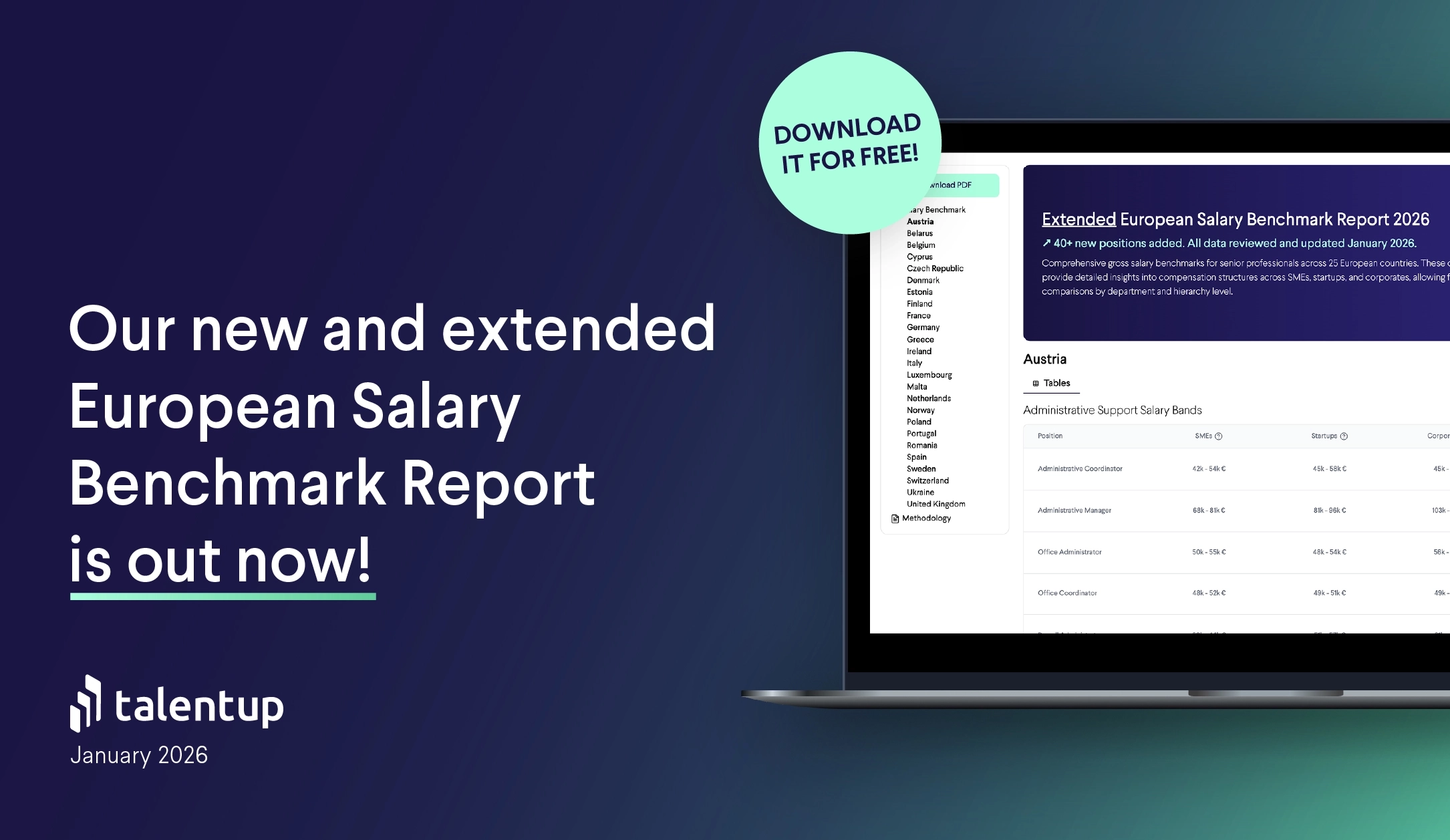
TalentUp Salary Platform emerges as a critical ally in this process. By providing access to comprehensive salary benchmarking, pay gap analysis, and advanced reporting capabilities, TalentUp equips HR teams with the insights needed to ensure compliance with the EU directive.

By leveraging TalentUp’s innovative solutions, HR professionals can simplify the complexities of salary transparency, enhance their organization’s equity efforts, and position their businesses as leaders in fair pay practices.
Further reading: Navigating Pay Transparency Laws with Real-Time Salary Data and Get Ready for 2026: Why Salary Benchmarking Is the Key to EU Pay Transparency Compliance.
Strategic Advantages of Early Adoption
Organisations that move ahead of the EU Pay Transparency Directive timeline rather than waiting for the compliance deadline gain several concrete advantages. In recruitment, early adopters can already use salary range disclosure as a differentiator — candidates in competitive markets increasingly prefer employers who publish ranges, and the best candidates have the leverage to act on that preference. Employer brand data consistently shows that transparency about pay is one of the top factors distinguishing preferred employers from those perceived as opaque or inequitable.
In retention, early equity remediation means that the first reporting cycle does not reveal gaps that trigger employee relations issues simultaneously with regulatory scrutiny. Organisations that have already closed significant pay gaps through proactive remediation — and that can document the objective criteria applied — will be in a fundamentally different position when the first public reports are filed than those that discover their gaps in the data at the same time as their employees and the regulator.
In management capability, early adopters have more time to build the manager skills needed to support a transparent pay environment — the ability to explain range placement, to have honest conversations about progression, and to apply performance criteria consistently. These are management capabilities that take time to develop; rushing them at the compliance deadline produces poor outcomes. Starting now, with the TalentUp Salary Platform as the market data foundation, gives organisations the runway to do this well.
The organisations that will look back on the EU Pay Transparency Directive as an opportunity rather than a burden are those that started early enough to shape their compensation governance deliberately rather than reactively. That window is still open. The question for HR leaders is not whether to prioritise salary transparency — the regulatory direction makes that clear — but how to sequence the work to build the most capable, equitable, and competitive compensation system possible within the time available.
Salary transparency is not a destination — it is a capability that organisations build over time and that requires ongoing investment to maintain. The companies that treat it as a living system rather than a one-time project will continue to reap the benefits of better talent decisions, stronger employee trust, and cleaner compliance as the regulatory environment around pay continues to evolve. Building that system well, anchored in current market data and applied with consistent criteria, is the most important compensation investment most European employers can make in the next 12 months.