Cookie Settings

We use cookies to improve your experience and for marketing. Visit our Cookies Policy to learn more.

Compensation

2026 Salary Increases: How Much Will Salaries Grow This Year?

Salary Finder: Your Global Pay Guide 🚀

Search Salaries for Any Role, Anywhere in the World with our Salary Benchmarking Platform

2026 Salary Increases: The Landscape Every HR Leader Must Understand

As we move through 2026, compensation budgets are under renewed pressure. After two years of above-inflation wage growth, European employers are navigating a delicate balance: staying competitive in a tight talent market while managing rising payroll costs. Here is a data-driven breakdown of what salary increases look like in 2026.

Wage Growth Across Europe in 2026

Which Sectors Are Seeing the Biggest Increases?

Healthcare, logistics, and green energy are also seeing above-average wage growth as structural labour shortages force employers to compete aggressively on compensation. Sales and commercial roles are rebounding after a flat period in 2024–2025, particularly in SaaS and tech-adjacent sectors.

Changing Labour Market Dynamics

The post-pandemic hiring surge has fully normalised. Job opening volumes have returned closer to pre-2021 levels in most markets, which means employers have slightly more time to hire — but have not gained significant leverage in compensation negotiations. Skilled candidates in high-demand roles continue to hold multiple offers.

What This Means for HR and Compensation Strategy in 2026

HR professionals need to approach 2026 salary planning with real-time data. Annual benchmarking cycles are increasingly insufficient — markets are moving too fast. Platforms like TalentUp’s Salary Intelligence allow teams to benchmark specific roles against live market data, supporting faster and more defensible compensation decisions.

Key priorities for compensation teams this year: auditing internal pay equity ahead of EU Pay Transparency Directive enforcement, building flexible pay band frameworks that can accommodate skills-based adjustments, and communicating total compensation value clearly to employees who increasingly know their market worth.

Sector-by-Sector Salary Growth in 2026

Salary growth in 2026 is far from uniform across sectors. Understanding where wage pressure is highest — and why — is essential for HR teams building compensation budgets and recruiters making competitive offers.

Technology: The Highest Pressure Sector

Technology remains the sector with the highest salary growth rates in 2026. AI/ML engineers, cybersecurity professionals, and cloud architects are seeing the most significant increases, driven by a supply-demand imbalance that shows no signs of resolving quickly. AI engineers command an average 12% premium over general software engineers, and this gap is widening as companies accelerate their AI deployment roadmaps.

In the Netherlands specifically, ASML’s growth and the broader Eindhoven tech cluster are pushing engineering salaries above national averages. Senior software engineers at leading Dutch tech firms are earning €95,000–130,000 plus equity — levels that were rare outside of the US market just five years ago.

Healthcare: Structural Shortages Drive Above-Inflation Growth

Healthcare is experiencing some of the most acute labour shortages in Europe in 2026. Nursing, specialist medicine, and elderly care are all facing significant supply gaps as populations age and training pipelines struggle to keep pace. Wage growth in Dutch healthcare is running above the CAO average, with significant regional variation — urban hospitals in Amsterdam and Rotterdam are competing more aggressively for staff than smaller regional facilities.

Finance and Professional Services: Steady but Selective

Finance and professional services are seeing selective salary growth in 2026. ESG and sustainability reporting specialists, risk and compliance professionals, and fintech-adjacent roles are commanding above-average increases as regulatory complexity grows. Traditional banking roles are seeing more moderate growth as automation continues to reshape back-office functions.

Green Energy and Sustainability: The Fastest-Growing New Category

Sustainability-related roles represent one of the fastest-growing salary categories in 2026. As EU emissions targets bite and companies face mandatory sustainability reporting obligations, demand for energy transition engineers, ESG analysts, and sustainable finance professionals is growing sharply. Supply remains extremely limited, creating strong upward wage pressure that is likely to continue through the decade.

How to Set Your 2026 Salary Budget

For HR leaders building compensation budgets in 2026, the headline Dutch CAO figure of 4.1% wage growth is a starting point, not a destination. Budget allocation needs to reflect the actual market dynamics of each workforce segment.

A practical approach is to tier your merit pool: allocate a higher percentage to high-demand, business-critical roles where the cost of attrition is greatest, and a lower percentage to roles with lower market pressure. Many leading European companies are operating with tiered merit pools ranging from 2% for lower-pressure roles to 8–12% for specialist positions in critical shortage categories.

Total compensation must also be considered holistically. Salary increases are only one component of a competitive offer. Pension contributions, equity participation, flexible working arrangements, and benefits packages all have real monetary value — and in some cases, optimising these elements can be more cost-effective than pure salary increases while delivering higher perceived value to employees.

Practical Tools for Staying Competitive

Keeping pace with salary growth in 2026 requires better data than most organisations currently have access to. Annual benchmarking surveys are too slow and too aggregated to support role-specific decisions in a market moving at current speed. Real-time platforms like TalentUp Salary Platform give HR and reward teams live salary intelligence by role, location, and experience level — enabling faster, more accurate, and more defensible compensation decisions throughout the year, not just at annual review time.

The organisations that will attract and retain the best people in 2026 are those that treat compensation as a continuous management discipline, backed by current data, and aligned to a clear understanding of where market pressure is greatest in their specific workforce.

Frequently Asked Questions About Salary Growth in 2026

Is 4.1% wage growth enough to keep up with inflation?

In the Netherlands, the inflation rate has moderated significantly from the peaks of 2022–2023, and the 4.1% CAO wage increase is expected to deliver modest real wage growth for most employees covered by collective agreements. However, employees in sectors not covered by CAOs, or in roles below the market midpoint, may still experience effective pay cuts in real terms if their individual increases lag the collective average. The picture is also uneven across demographics — workers in lower-wage brackets, who spend a higher proportion of income on essentials, continue to experience meaningful cost-of-living pressure even as headline inflation falls.

Which types of employees are most at risk of being underpaid in 2026?

Three groups face the highest risk of falling below market rates in 2026. First, long-tenured employees who have received incremental annual increases but whose salaries have been outpaced by the rapid market movements of the past three years — particularly in technology and specialist roles. Second, employees on fixed pay bands that have not been updated to reflect current market conditions. Third, employees who historically relied on informal negotiation and may not have the information or confidence to initiate a pay review conversation.

How often should organisations review their salary bands?

Best practice in 2026 is to review salary bands at least annually, with mid-year check-ins for roles in high-movement categories. Annual surveys are still valuable for systematic band updates, but supplementing them with real-time data tools enables faster response to market shifts without waiting for the annual cycle. For the highest-demand roles — AI engineering, cybersecurity, data engineering — some organisations have moved to quarterly band reviews as a standard practice.

What is the best way to communicate a below-market salary to an employee?

Transparency is essential. Acknowledging the gap, explaining the constraints (budget cycle, band adjustment timeline), providing a concrete commitment to when and how it will be addressed, and offering alternative value where possible (development opportunities, additional leave, project visibility) maintains trust far better than minimising or avoiding the conversation. Employees who receive honest, respectful communication about pay issues are significantly more likely to remain while adjustments are made than those who feel their situation is not acknowledged or taken seriously.

Final Thoughts: Staying Ahead in 2026

The Dutch and European salary landscape in 2026 rewards organisations that treat compensation as a continuous, data-driven discipline. Collective agreement increases provide a useful baseline, but the real competitive battle for talent is won or lost in the specifics — the right pay band for each role, the right investment in high-pressure segments, and the ability to make fast, well-evidenced decisions when the market demands it. Organisations that combine a strong compensation framework with genuine employer brand and total reward clarity will attract and retain the talent needed to succeed in what remains a highly competitive European market.

Benchmark Salaries with TalentUp

Sources

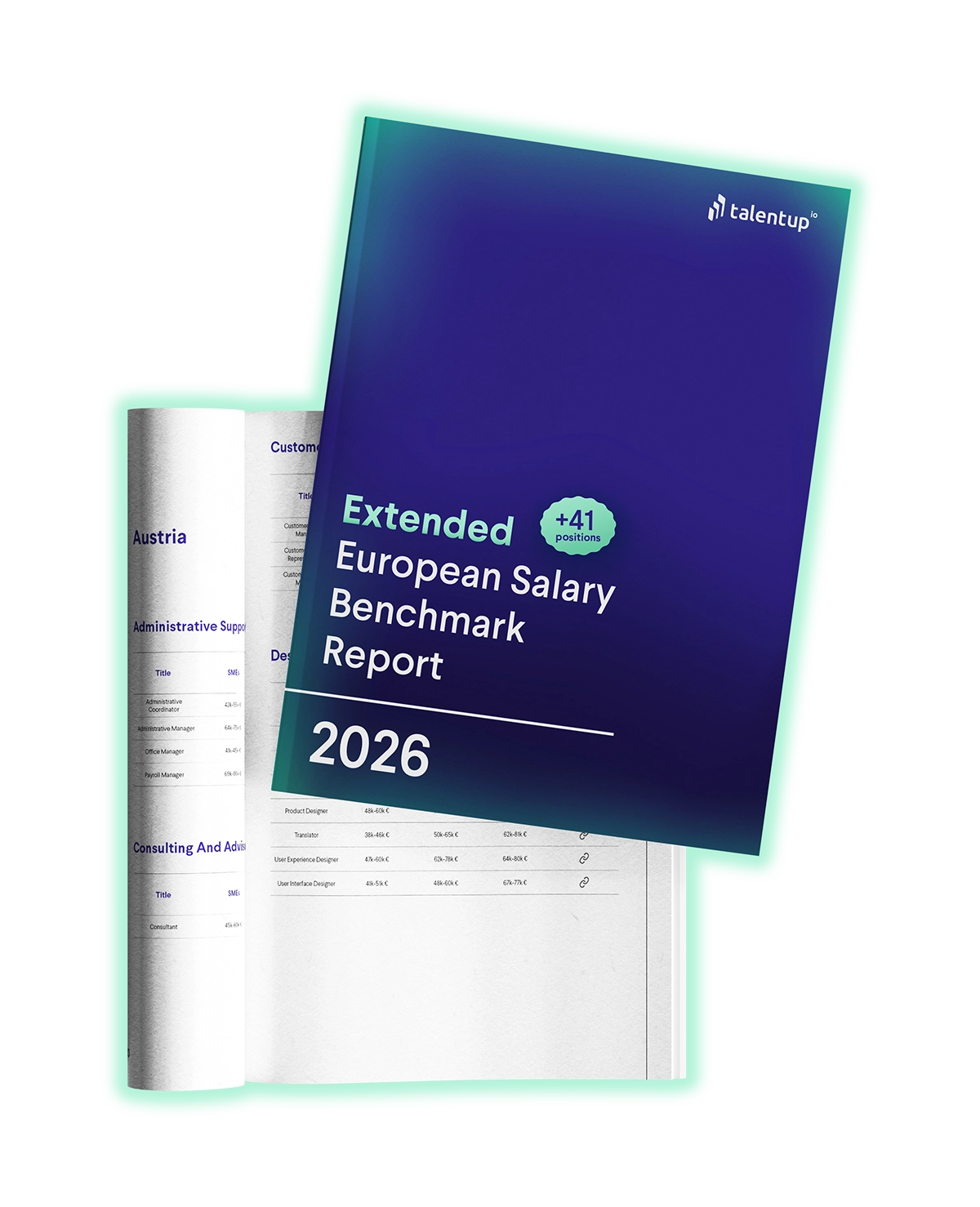
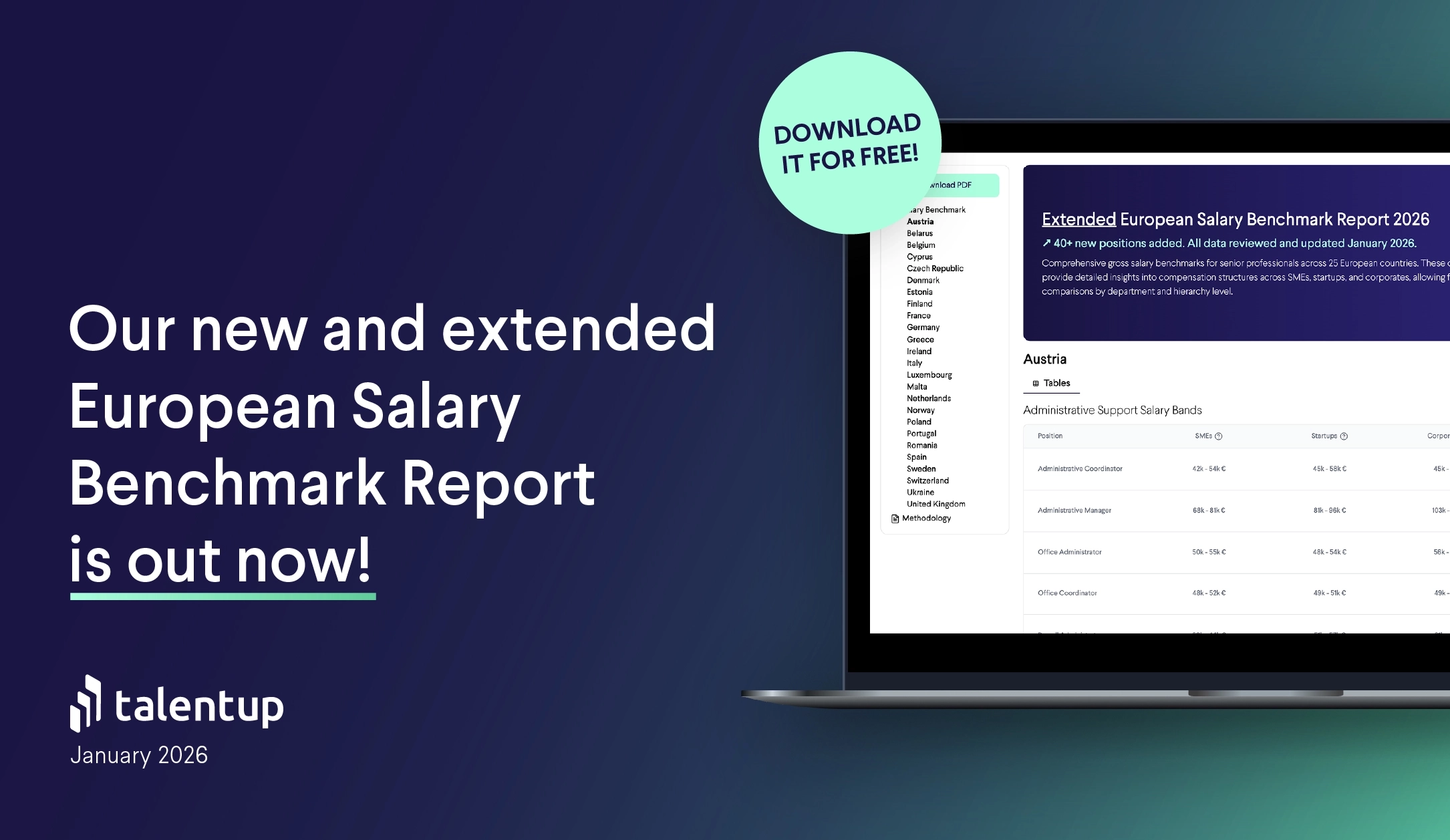
European Salary Benchmark Report

The Report includes gross salary for more than 75 top-tier professional job positions in 25 European countries.

Download now EU Report Mockup with download it for free overlay

Subscribe to our newsletter and stay updated

No spam, unsubscribe at any time