Cookie Settings

We use cookies to improve your experience and for marketing. Visit our Cookies Policy to learn more.

Managing Contractors and Employees in One Workforce Strategy: The Near Future of HR

Salary Finder: Your Global Pay Guide 🚀

Search Salaries for Any Role, Anywhere in the World with our Salary Benchmarking Platform

The modern workforce has fundamentally changed. Walk into any company today and you will find a mix of full-time employees, part-time staff, freelancers, independent contractors, and consultants all working toward the same business goals. Yet, in most organizations, HR still manages these groups through entirely separate processes, tools, and mindsets.

This fragmented approach is becoming a liability. As the blended workforce grows, the organizations that win will be those that learn to manage employees and contractors under a single, coherent workforce strategy, with consistent data, fair compensation frameworks, and full visibility across every type of worker.

This article explores what that shift looks like in practice, why it matters for HR and Compensation and Benefits professionals, and how to start building the infrastructure you need today.

Why the Blended Workforce Is Now the Default

The rise of the contingent workforce is not a trend. It is a structural shift backed by hard data. According to the US Bureau of Labor Statistics, 10.2% of the American workforce now operates under alternative work arrangements as their primary job, with independent contractors alone representing 7.4% of the total, up from 3.8% in 2017. In the European Union, Eurostat counts nearly 28 million self-employed workers as of 2023. And looking ahead, a 2025 Staffing Industry Analysts survey of contingent workforce buyers found that companies expect their contingent workforce share to grow from 21% today to 26% within ten years. The global market for managing this workforce reflects that momentum: it is projected to nearly triple, reaching $465 billion by 2031, according to Allied Market Research.

Several forces are driving this:

Workforce flexibility demand. Companies need to scale capacity up and down quickly in response to market conditions. Contractors give them that elasticity without the long-term cost commitments of permanent headcount.

Talent scarcity in specialized roles. In areas like data science, software engineering, UX design, and compliance, top professionals often choose to work independently. If companies want access to that talent, they need to engage it on contractor terms.

Cost optimization pressure. With rising employment costs, including social contributions, benefits, and compliance overhead, many organizations are deliberately shifting parts of their workforce toward project-based or freelance arrangements.

Remote and global work normalization. The post-pandemic shift to distributed work made it far easier to engage workers across geographies, many of whom operate under contractor or freelance status rather than traditional employment.

The result is a workforce that is more diverse in its legal and contractual makeup than at any previous point in modern HR history. And that diversity creates both opportunity and complexity.

The Problem with Managing Two Parallel Workforces

Most HR and People Operations teams grew up building processes for employees. Performance management cycles, benefits administration, onboarding workflows, compensation bands, equity plans: all of it was designed for permanent staff on payroll.

When contractors entered the picture, they were often handled as a procurement issue rather than a people issue. Finance managed supplier contracts. Legal handled compliance. HR stayed largely out of it.

This division made some sense when contractors were a small and peripheral part of operations. It makes very little sense now.

Here is what happens when organizations fail to integrate their workforce management approach:

Compensation inconsistencies and pay equity risks. Without a single view of what the market pays for a given role, regardless of whether it is filled by an employee or a contractor, organizations often end up overpaying contractors (because they lack benchmarking data) or underpaying employees (because contractor costs are not factored into total compensation strategy). Both scenarios create risk.

Visibility gaps that hurt planning. When workforce data lives in separate systems, headcount reports are incomplete, skills inventories are inaccurate, and succession planning misses critical contributors. Leaders end up making talent decisions based on a partial picture.

Engagement and culture fragmentation. Contractors who feel like second-class workers disengage quickly, deliver lower quality work, and leave at the first opportunity. The absence of integration in how organizations manage their blended workforce often translates directly into project risk.

Compliance exposure. Misclassification of workers as independent contractors when they should legally be employees is one of the most costly HR mistakes an organization can make. Without centralized visibility and clear classification frameworks, companies remain exposed to legal challenges, fines, and reputational damage.

What a Unified Workforce Strategy Actually Looks Like

Building a unified strategy does not mean treating employees and contractors identically. They have different legal statuses, different contractual relationships, and different needs. What it means is managing both groups intentionally, with consistent standards, shared data infrastructure, and integrated planning.

Here are the core pillars of that strategy:

1. A Single Source of Truth for Workforce Data

The foundation of any integrated approach is having all worker data, both employees and contractors, visible in one place. This does not necessarily require a single system of record. It requires that the data from different systems (your HRIS for employees, your vendor management system or project tools for contractors) is consolidated into a unified view that HR and Finance can access and analyze together.

Key data points to consolidate include: role and function, cost per hour or month, length of engagement, skills and competencies, performance indicators, and geographic location.

2. Compensation Benchmarking That Covers the Full Workforce

One of the most urgent gaps in most HR teams’ toolkits is compensation data that covers contractors and freelancers alongside traditional employees. In most benchmarking databases, contractor rates are either absent or treated separately, which means compensation teams are making decisions without a complete picture.

This is where platforms that provide market data across both worker types become critical. When you know what the market pays a Senior Data Analyst as a permanent employee versus a day-rate contractor in your specific geography, you can make informed decisions about whether to hire, contract, or convert, and at what price point.

We will return to this point at the end of this article.

3. A Clear Worker Classification Framework

Every organization needs a documented, consistently applied framework for deciding whether a given role should be filled by an employee or a contractor. This framework should be developed in collaboration between HR, Legal, and Finance, and it should account for:

  • The degree of control the company exercises over how the work is done
  • Whether the role involves regular, ongoing work versus defined project deliverables
  • The exclusivity of the engagement
  • The applicable labor law in the worker’s jurisdiction
  • A strong classification framework is both a compliance tool and a strategic planning tool. It forces discipline around workforce design decisions and reduces the risk of costly misclassification.

    4. Integrated Onboarding and Offboarding

    The experience a worker has when joining and leaving your organization shapes their performance, their perception of your brand, and their likelihood of returning or referring others. Contractors deserve a structured onboarding experience that sets clear expectations, provides the context they need to contribute quickly, and connects them to the right people and resources.

    Similarly, offboarding should not simply be a matter of ending a purchase order. Knowledge transfer, exit feedback, and maintaining the relationship for potential future engagements all require intentional process.

    5. Performance and Contribution Tracking

    Measuring the contribution of contractors can be challenging, especially for knowledge workers. But the absence of measurement creates accountability gaps and makes it difficult to assess value for money or make informed decisions about extending, expanding, or ending engagements.

    HR teams should work with business unit leaders to define what good contractor performance looks like for each type of engagement, how it will be tracked, and who owns the evaluation. These frameworks do not need to be as complex as formal employee performance management processes, but they need to exist.

    The Compensation and Benefits Dimension

    For Compensation and Benefits professionals specifically, the rise of the blended workforce creates a unique set of challenges and opportunities.

    Total rewards thinking has to evolve. Traditional total rewards frameworks focus almost entirely on employees: base salary, bonus, benefits, equity, allowances. But when a significant portion of your workforce operates outside those structures, you need a broader lens. What does the total cost of workforce, across both employment types, look like? How does it compare to market? How is it evolving?

    Pay equity analysis needs to include contractors. In many jurisdictions, pay equity legislation is expanding in scope and enforcement. While contractor pay is often treated as outside the scope of pay equity analysis, regulators and courts are increasingly scrutinizing the full picture of how organizations compensate different groups of workers for equivalent work. Getting ahead of this means building compensation transparency and equity analysis that includes contingent workers.

    Benefits strategy may need to flex. Some organizations are beginning to explore whether certain benefits, such as access to learning platforms, mental health resources, or emergency assistance, should be extended to long-term contractors. This is partly a talent attraction play and partly a recognition that the line between employee and contractor is increasingly blurred in terms of the actual working relationship.

    Benchmarking is the foundation. None of the above is possible without reliable, current, and comparable market data. That data needs to cover both employees and contractors, broken down by role, level, geography, and industry. This is the intelligence layer that enables Compensation and Benefits professionals to make evidence-based recommendations rather than educated guesses.

    How to Start Building Your Integrated Workforce Strategy

    If your organization is still managing employees and contractors in parallel silos, here is a practical path forward:

    Step 1: Conduct a workforce audit. Map your current workforce in its entirety. How many contractors do you have? In what roles? At what cost? How long have they been engaged? This audit alone typically surfaces significant surprises.

    Step 2: Identify your highest-risk gaps. Where is your compensation data incomplete? Where do you lack classification clarity? Where are contractors performing work that looks functionally equivalent to employee roles? These are your priority areas.

    Step 3: Build cross-functional ownership. An integrated workforce strategy requires alignment between HR, Finance, Legal, and Procurement. Establish a working group with representation from each function and define clear ownership for each element of the strategy.

    Step 4: Invest in the right data infrastructure. You cannot manage what you cannot measure. Identify the tools and data sources you need to close your visibility gaps, and build the business case for investing in them.

    Step 5: Pilot integrated processes in one business unit. Rather than attempting an organization-wide transformation at once, select one business unit to pilot your integrated approach. Use what you learn to refine the model before scaling.

    The Competitive Advantage of Getting This Right

    Organizations that figure out how to manage their blended workforce well gain real competitive advantages. They can scale faster, access a broader talent pool, control workforce costs more precisely, and maintain compliance in an increasingly complex regulatory environment.

    For HR and Compensation and Benefits professionals, this is also a career-defining opportunity. The shift toward integrated workforce management is creating demand for a new kind of HR expertise: one that combines deep knowledge of traditional employment with fluency in contingent workforce dynamics, total workforce cost analysis, and data-driven compensation strategy.

    The professionals who develop that expertise now will be the ones shaping workforce strategy at the most forward-thinking organizations in the years ahead.

    Ready to Benchmark Your Full Workforce?

    Building a unified compensation strategy starts with having the right data. TalentUp’s salary benchmarking platform provides market compensation data for both employees and contractors, covering a wide range of roles, levels, geographies, and industries.

    Whether you are trying to set competitive pay for a permanent hire, price a contractor engagement fairly, or understand the cost differential between both approaches in your target market, TalentUp gives you the intelligence you need to make confident, data-backed decisions.Explore TalentUp’s Salary Platform and start benchmarking your full workforce today.

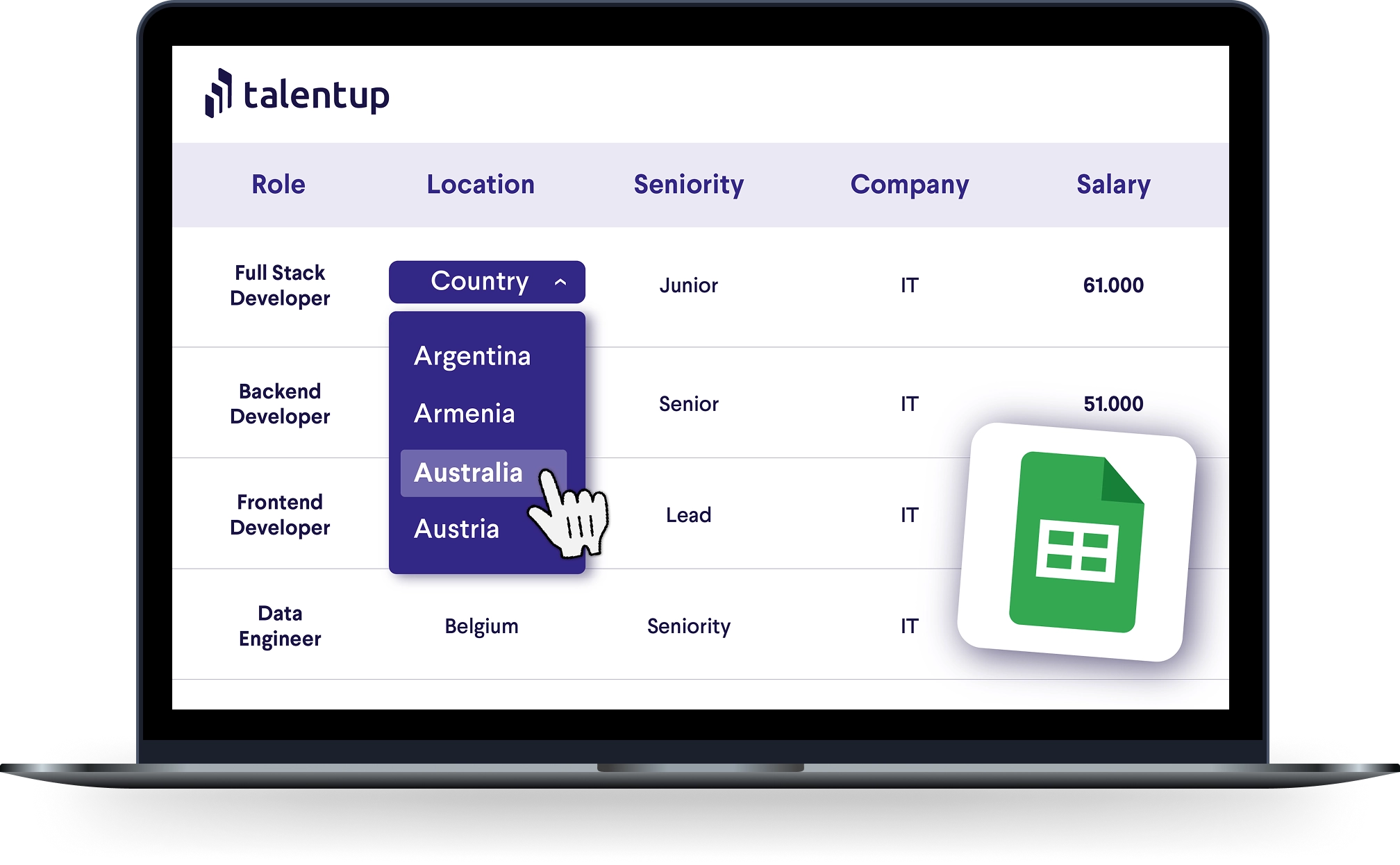
    Global Salary Benchmark Excel

    This free Excel offers salary information covering 475 job roles across 75 countries, comparing salary ranges internationally.

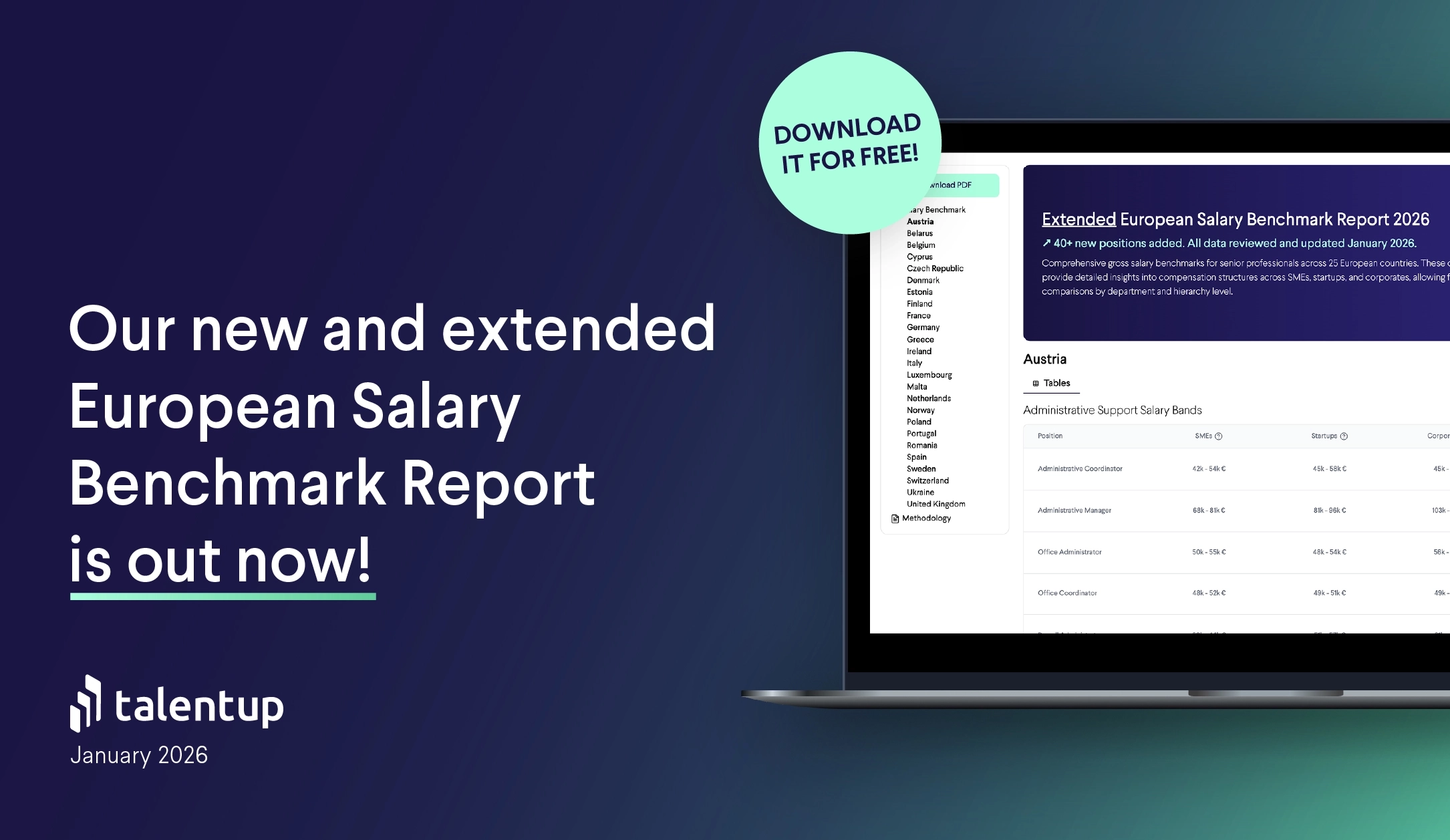
    Download now Excel Salary Benchmarking Mockup with download it for free overlay

    Subscribe to our newsletter and stay updated

    No spam, unsubscribe at any time