Cookie Settings

We use cookies to improve your experience and for marketing. Visit our Cookies Policy to learn more.

How to Manage Employees’ Salary Expectations: A Comprehensive Guide for HR and Compensation & Benefits Professionals

Salary Finder: Your Global Pay Guide 🚀

Search Salaries for Any Role, Anywhere in the World with our Salary Benchmarking Platform

Most HR and Compensation and Benefits (C&B) teams face a delicate balancing act: staying competitive enough to attract and retain high-performing employees while keeping compensation structures equitable, sustainable, and aligned with business realities. This challenge becomes especially prominent when frontline managers or employees raise concerns about pay, market changes, or internal fairness. For HR leaders, knowing how to manage employees’ salary expectations effectively is now a core skill—not just a functional responsibility.

This article offers a deep, practical guide for HR and C&B professionals who want to manage salary expectations strategically, transparently, and with data-backed confidence. We’ll explore market forces, internal policies, communication frameworks, and compensation design considerations—all with the aim of helping you strengthen both talent retention and organizational trust.

1. Why Managing Employees’ Salary Expectations Matters More Than Ever

Salary expectations evolve across the employee lifecycle: hiring, promotion, performance review, internal mobility, and even exit interviews. Recently, several market factors have reshaped how employees think about compensation:

1.1 Employees Now Have More Access to Market Data

Salary transparency laws in many regions, online salary calculators, and employer review sites have democratized pay information. Even when these sources are inaccurate or overly broad, they influence sentiment. Employees increasingly expect HR to justify pay decisions with credible data and competitive logic.

1.2 Inflation and Economic Uncertainty Impact Employee Perception

When the cost of living rises, employees feel financial pressure. They often assume their salary should rise at an equal or faster rate, regardless of company performance. HR teams must manage expectations by explaining differentiators between cost-of-living adjustments (COLA), merit increases, and market adjustments.

1.3 Talent Scarcity Has Raised Compensation Sensitivity

Highly skilled employees—especially in tech, data, engineering, and specialized sales roles—know they are in demand. If your organization cannot explain how it keeps pay competitive, turnover becomes a real risk.

1.4 Purpose and Fairness Are Now Core to Engagement

Employees expect fairness: internal equity, pay transparency, and consistent frameworks. Without clearly defined and communicated pay structures, HR loses credibility and trust.

The payoff of managing expectations well is long-term: higher engagement, lower attrition, more predictable workforce planning, and stronger employer branding.

2. Root Causes Behind Employee Salary Misalignment

Understanding why salary expectations diverge from company offerings allows HR professionals to address concerns proactively.

2.1 Outdated or Incomplete Market Data

Employees may cite salary ranges found online that reflect national averages, inflated estimates, or data from unrelated industries. Without dependable compensation benchmarking, HR encounters significant challenges in rectifying misunderstandings.

2.2 Insufficient Communication

If employees do not understand how compensation is designed—ranges, pay grades, job architecture, performance drivers—they often fill knowledge gaps with assumptions.

2.3 Perception of Pay Compression

When new hires receive high starting salaries, longer-tenured employees may feel unfairly compensated. Pay compression is one of the most frequent triggers of salary dissatisfaction.

2.4 Lack of Clear Career Development Pathways

Employees whose growth path is unclear tend to believe salary progression is arbitrary. Transparent career ladders reduce frustration and set realistic expectations.

2.5 Manager Misinformation

Managers sometimes make offhand remarks about raises, promotions, or market salaries without HR alignment. This creates expectations that HR then must “correct,” often at a reputational cost.

3. A Framework for Managing Employees’ Salary Expectations Strategically

Effective expectation management blends compensation strategy, communication, and manager enablement. Below is a framework designed for HR and C&B professionals to deploy consistently.

4. Start With a Solid Compensation Philosophy

Your compensation philosophy is the foundation of expectation management. Without it, pay decisions feel arbitrary.

A strong compensation philosophy answers:

  • What is our target market position? (P50? P75?)
  • How do we balance internal equity with external competitiveness?
  • How performance-driven should our compensation model be?
  • How do we define total rewards—not just base salary?
  • When employees understand why compensation works the way it does, they are more likely to view salary outcomes as fair, even if they do not match personal expectations.

    5. Build and Maintain Accurate Salary Benchmarking

    To confidently manage expectations, HR needs dependable, up-to-date market data.

    Key components include:

    5.1 Use Trusted Data Sources

    Relying on self-reported salary websites is not ideal. C&B teams require market-specific, role-specific, and seniority-specific benchmarking drawn from robust datasets.

    5.2 Update Benchmarks Annually—or More Often in Dynamic Markets

    Market rates, especially in fast-moving sectors, shift quickly. Quarterly or biannual updates may be necessary for certain high-competitiveness roles.

    5.3 Benchmark Roles Based on Job Content, Not Titles

    Employees often compare themselves with job titles that sound similar but differ in scope. Standardizing job architecture prevents misaligned comparisons.

    5.4 Use Benchmarking to Justify Pay Ranges

    Showing employees and managers that ranges are anchored in real data strengthens trust and credibility.

    The better your benchmarking, the easier it is to correct inflated or unrealistic salary requests.

    6. Strengthen Internal Equity and Pay Structures

    Transparent, structured pay systems reduce confusion and support consistent management of salary expectations.

    6.1 Clear Job Levels and Pay Grades

    Each role should have:

  • a defined level
  • a salary range
  • expected skills and competencies
  • progression criteria
  • This allows HR to explain why one employee is at the midpoint while another is at the range minimum.

    6.2 Strategies to Address Pay Compression

    Solutions include:

  • targeted adjustments
  • re-leveling or job architecture updates
  • improving hiring calibration
  • training managers to avoid setting unrealistic precedents
  • 6.3 Documented Compensation Policies

    Examples:

  • promotion increase ranges
  • merit increase guidelines
  • rules for off-cycle adjustments
  • geographic differentials
  • When policies are consistent, employees perceive fairness—even in difficult conversations.

    7. Train Managers to Discuss Compensation Confidently

    Managers have the most influence over employee sentiment. Yet many feel uncomfortable or unprepared to discuss compensation.

    7.1 Provide Manager Training on Salary Conversations

    Cover:

  • how pay ranges work
  • how market data influences decisions
  • what they can and cannot promise
  • how to redirect questions to HR
  • how to discuss performance vs. market factors
  • 7.2 Give Managers Talking Points and Tools

    These can include scripts, FAQs, and data visualizations.

    7.3 Encourage Regular, Proactive Conversations

    Avoid letting discussions pile up until annual review periods. Continuous feedback reduces surprise and dissatisfaction.

    8. Create Transparent Internal Communication Around Pay

    Communication is often the missing piece in expectation management.

    8.1 Explain How Pay Is Determined

    Use simple language and visuals to show how:

  • salary ranges are built
  • market benchmarking works
  • performance ties to pay
  • promotion processes operate
  • 8.2 Share Pay Ranges Where Legally Appropriate

    More companies openly publish salary bands internally—and even externally—to boost trust.

    8.3 Provide Personalized Pay Range Positioning

    Employees appreciate knowing where they sit in the range and why.

    8.4 Use Total Rewards Statements

    These showcase:

  • salary
  • bonuses
  • benefits
  • allowances
  • equity
  • retirement contributions
  • When employees see the full picture, their expectations often become more balanced.

    9. How to Handle Difficult Salary Conversations

    Difficult conversations are inevitable. HR should equip both leaders and themselves with the right approaches.

    9.1 When an Employee Requests a Raise

    A strong response combines:

  • data (“Here is the benchmark for your role”)
  • performance insights (“Here’s how your performance aligns with expectations”)
  • development plans (“Here’s what’s needed to progress toward the midpoint or next level”)
  • 9.2 When Salary Expectations Are Above Market

    Use data-driven explanations:

  • differences in job scope
  • geographic variants
  • seniority mismatches
  • inflated online data sources
  • Show employees where their expectations diverge from the real market, using benchmarking as an anchor.

    9.3 When Budgets Are Tight

    Communicate openly:

  • explain financial constraints
  • emphasize non-monetary rewards
  • offer development opportunities
  • set expectations for future review windows
  • Honesty paired with empathy preserves trust.

    9.4 When Employees Compare Salaries Internally

    Use internal equity principles:

  • job level alignment
  • skill and responsibility differences
  • tenure and performance factors
  • Avoid discussing other employees’ specific compensation; focus on structure and process.

    10. Retention Strategies That Reduce Salary Pressure

    Managing expectations isn’t only about pay—it’s also about creating conditions in which employees feel valued.

    10.1 Strengthen Career Pathing

    Clear progression pathways help employees see future earning potential without immediate salary demands.

    10.2 Improve Manager-Employee Relationships

    Research consistently shows employees leave managers, not companies. Strong relationships reduce salary-led turnover.

    10.3 Offer Flexibility and Development

    Flexible schedules, mobility opportunities, learning budgets, and recognition programs reduce reliance on salary as the only motivator.

    10.4 Use Early Warning Signals

    Track:

  • flight risk indicators
  • compensation outliers
  • roles with high market volatility
  • Proactive adjustments often cost less than replacement.

    11. Best Practices for Managing Salary Expectations in a Transparent Era

    To summarize key principles:

  • Use reliable salary benchmarking to guide decisions and conversations.
  • Communicate proactively rather than waiting for dissatisfaction to surface.
  • Anchor all conversations in your compensation philosophy to maintain consistency.
  • Empower managers to discuss compensation confidently and accurately.
  • Provide visibility into career progression, not just current salary.
  • Document and standardize processes to ensure fairness.
  • Adapt quickly to market shifts—especially in competitive talent pools.
  • When HR and C&B teams combine structured systems with transparent communication, salary discussions become far less contentious and far more productive.

    12. How TalentUp Salary Benchmarking Platform Helps HR Manage Employees’ Salary Expectations

    A key challenge for HR and compensation professionals is accessing accurate, real-time, role-specific salary data that can be used in employee conversations and strategic planning. The TalentUp Salary Benchmarking Platform provides reliable market insights across industries and countries, allowing C&B teams to validate pay ranges, correct employee misconceptions with confidence, and maintain competitive compensation strategies. By grounding expectations in real-time market data, TalentUp helps HR leaders create fair, transparent, and data-backed pay practices that strengthen employee trust and retention.

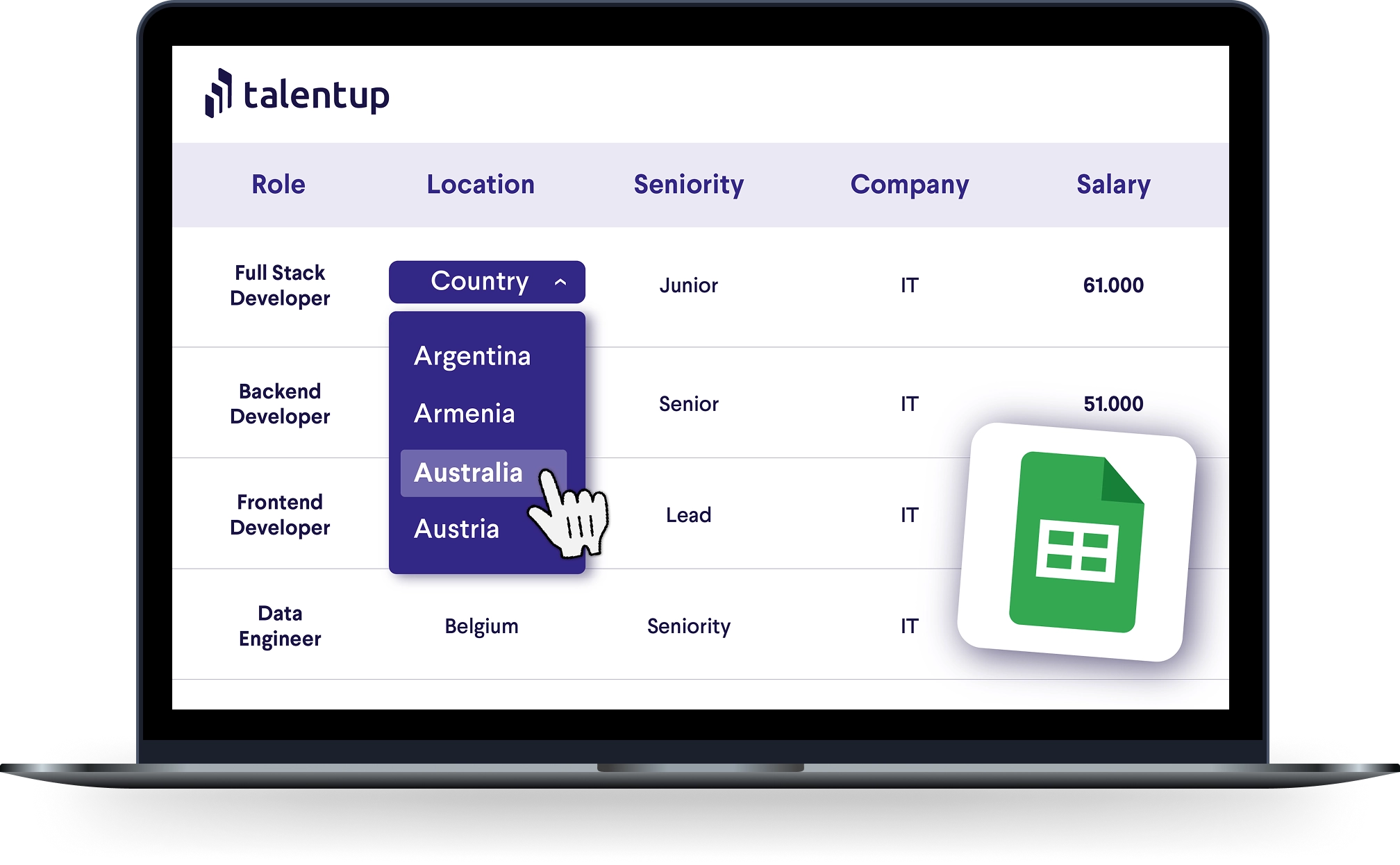
    Global Salary Benchmark Excel

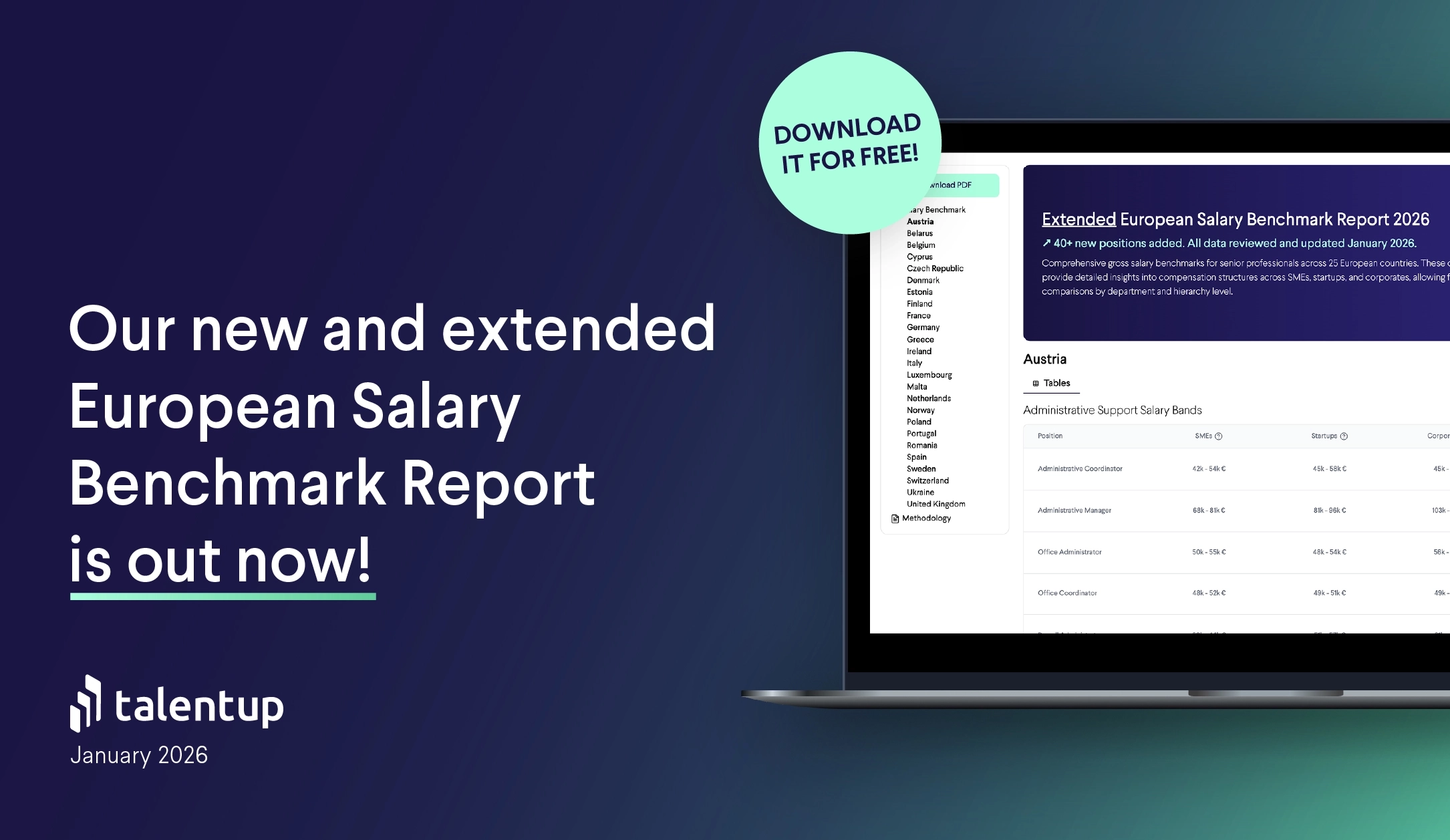
    This free Excel offers salary information covering 475 job roles across 75 countries, comparing salary ranges internationally.

    Download now Excel Salary Benchmarking Mockup with download it for free overlay

    Subscribe to our newsletter and stay updated

    No spam, unsubscribe at any time